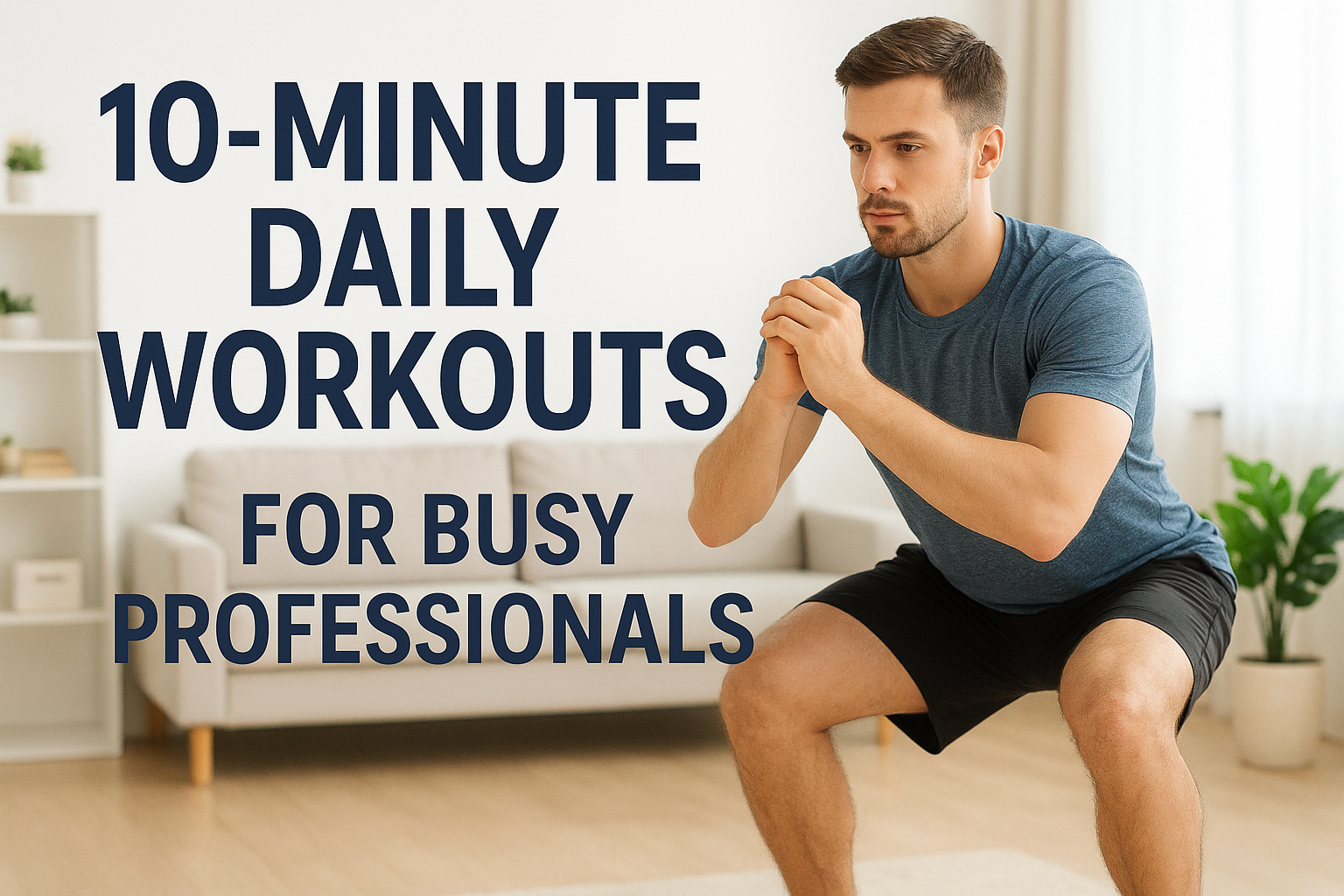
For many professionals, a full training block feels out of reach. Yet committing just 10 minutes a day can deliver meaningful benefits and help you stay consistent. Below are practical, no-fluff routines you can do anywhere—home, hotel room, or even the office. Pick one you like, or rotate a few to keep things fresh.
How to fit 10 minutes into a busy day
– Schedule it: Treat the 10 minutes as an essential meeting you can’t miss.
– Prep once, reuse daily: Keep a lightweight bag with a towel and a water bottle in a desk drawer or at the foot of your bed.
– Use a timer: Set a 10-minute timer and move through moves with minimal breaks.
– Prioritize form: Quality over quantity. If you’re tired, shorten ranges of motion rather than rushing.
– Progress gradually: As you get fitter, increase intensity (faster tempo, adds reps, or add a backpack with books).
Routine 1: No-equipment full-body (10 minutes)
Structure: 2 minutes warm-up, 6 moves x 45 seconds work + 15 seconds rest, 2 minutes cooldown
– Warm-up (2 minutes): marching in place, arm circles, ankle rolls, light torso twists.
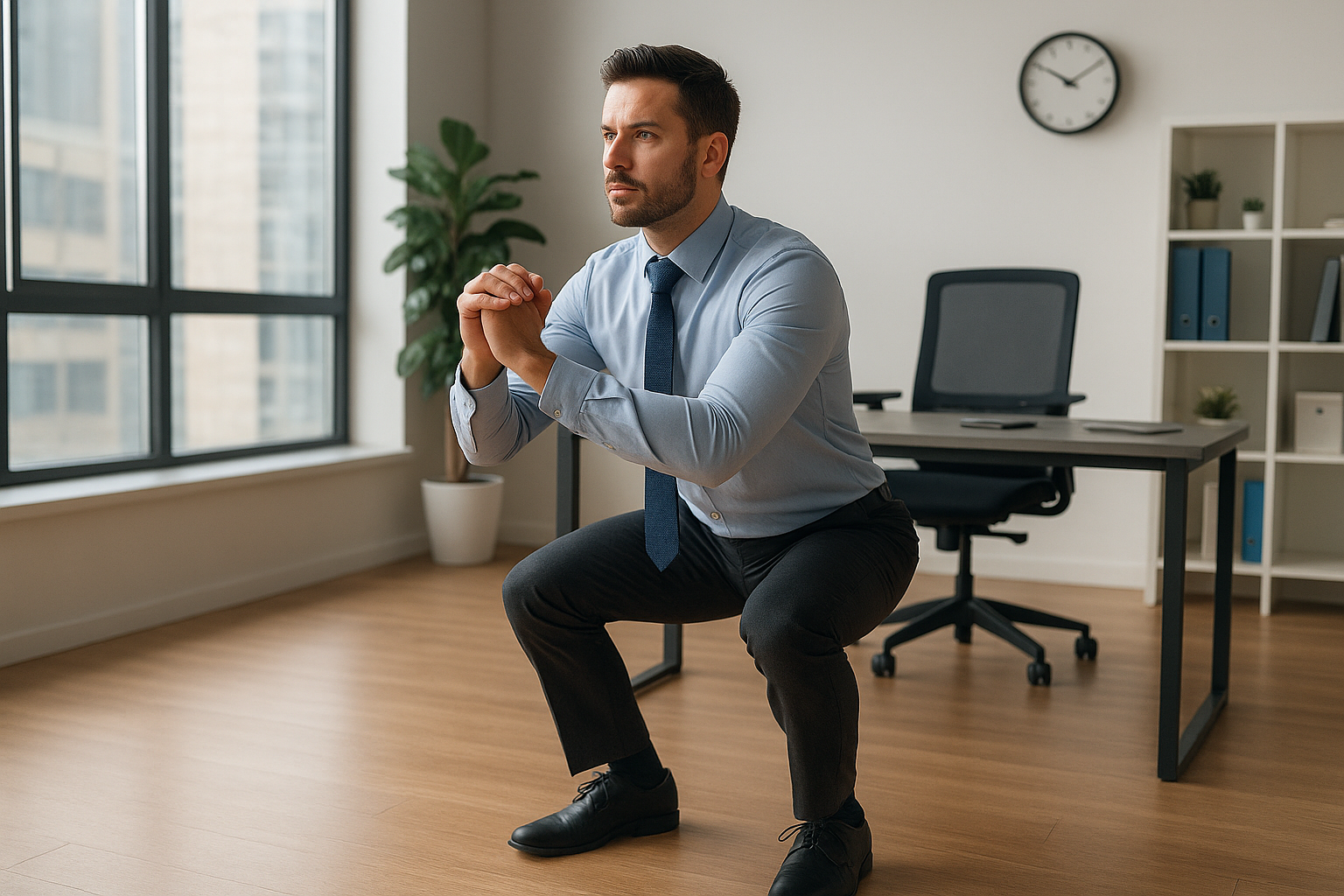
– Move 1: Squats
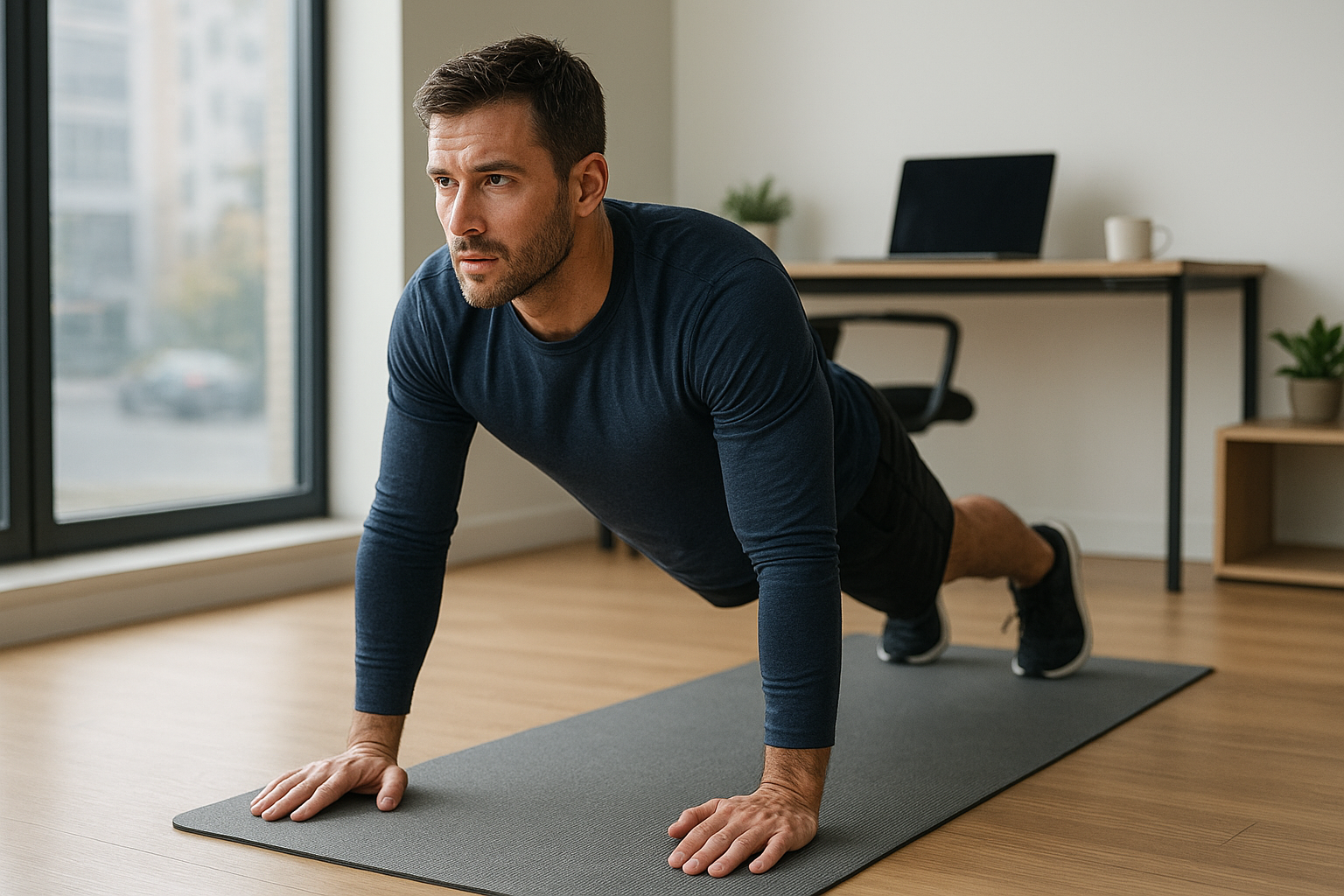
– Move 2: Incline push-ups (hands on a desk, solid chair, or countertop)
– Move 3: Bent-over row with a towel or a backpack
– Move 4: Reverse lunges
– Move 5: Front plank
– Move 6: Glute bridges
– Cool-down (2 minutes): chest stretch against a wall, hip-flexor stretch lunging gently, 20–30 seconds per side, and a light forward fold for the hamstrings.
Notes:
– If you need more rest, add 10 seconds between moves.
– To progress, increase reps per move or hold positions longer (e.g., 60 seconds per move) as you improve.
Routine 2: Cardio blast (10 minutes, no heavy impact)
Structure: 2 minutes warm-up, 6 moves x 40 seconds work + 20 seconds rest, 2 minutes cooldown
– Warm-up (2 minutes): gentle jog in place, shoulder rolls, ankle taps.
– Move 1: March in place with high knees or a low-impact alternative (heel-toe taps)
– Move 2: Side-to-side step touch with arm punches
– Move 3: Jumping jacks or low-impact jacks (step out with arms wide)
– Move 4: Mountain climbers or knee drives (pace to comfort)
– Move 5: Butt kicks or fast heel taps
– Move 6: Quick feet shuffle or line hops (low height)
– Cool-down (2 minutes): slow march, gentle hamstring/hip stretches, deep breaths
Tips:
– Quiet office version: replace jumping moves with stepping versions (step taps, side steps, and marching in place).
– Intensity cue: performance should be challenging but sustainable for 40 seconds.
Routine 3: Strength-focused with weights or household items (10 minutes)
Structure: 2 minutes warm-up, 6 moves x 40 seconds work + 20 seconds rest, 2 minutes cooldown
– Warm-up (2 minutes): arm circles, light hinge movements, bodyweight squats.
– Move 1: Goblet squat (hold a dumbbell, kettlebell, or a filled backpack)
– Move 2: One-arm row (each side) or two-arm row using a backpack or water bottles
– Move 3: Overhead press (dumbbells, bottles, or a weighted backpack)
– Move 4: Hip hinge/Deadlift (light dumbbells or a heavy backpack)
– Move 5: Split squat or stationary lunge (holding weights if possible)
– Move 6: Farmer’s carry (walk around your space while holding weights or a filled bag)
– Cool-down (2 minutes): gentle chest and shoulder stretch, hamstring stretch, hip flexor stretch
Notes:
– If you don’t have weights, use filled bottles, cans, or a sturdy backpack to add resistance.
– For unilateral moves (one-arm row, split squat), perform the prescribed time on one side, then switch to the other for balance.
Routine 4: Mobility and core (10 minutes)
Structure: 2 minutes warm-up, 6 moves x 40 seconds work + 20 seconds rest, 2 minutes cooldown

– Warm-up (2 minutes): cat-cow, shoulder blade squeezes, hip circles.
– Move 1: Thread the needle (spinal mobility)
– Move 2: Bird dog (alternating sides)
– Move 3: Dead bug (core stability)
– Move 4: Glute bridge march
– Move 5: Half-klex or couch stretch variations for hips
– Move 6: Child’s pose with a gentle twist
– Cool-down (2 minutes): supine twist, gentle back-to-chest stretch, and a relaxed seated forward bend
Consistency and progression tips
– Mix and match: rotate routines across the week to hit different muscle groups and keep motivation high.
– Track progress: note reps, holds, or perceived exertion to see improvements and stay motivated.
– Scale safely: increase intensity only when form is solid. If you have pain (not to be confused with normal exertion), scale back and consult a professional.
– Make it a habit: link workouts to a daily cue (after coffee, before lunch, or after you return from a meeting).
Closing
Ten minutes a day is not a compromise; it’s a practical, sustainable approach for busy professionals to stay active, manage stress, and protect long-term health. Use these routines as a starting point, mix in variations, and tailor to your space and equipment. If you’d like, tell me what equipment you have and your current fitness level, and I’ll tailor a personalized week-by-week plan.