

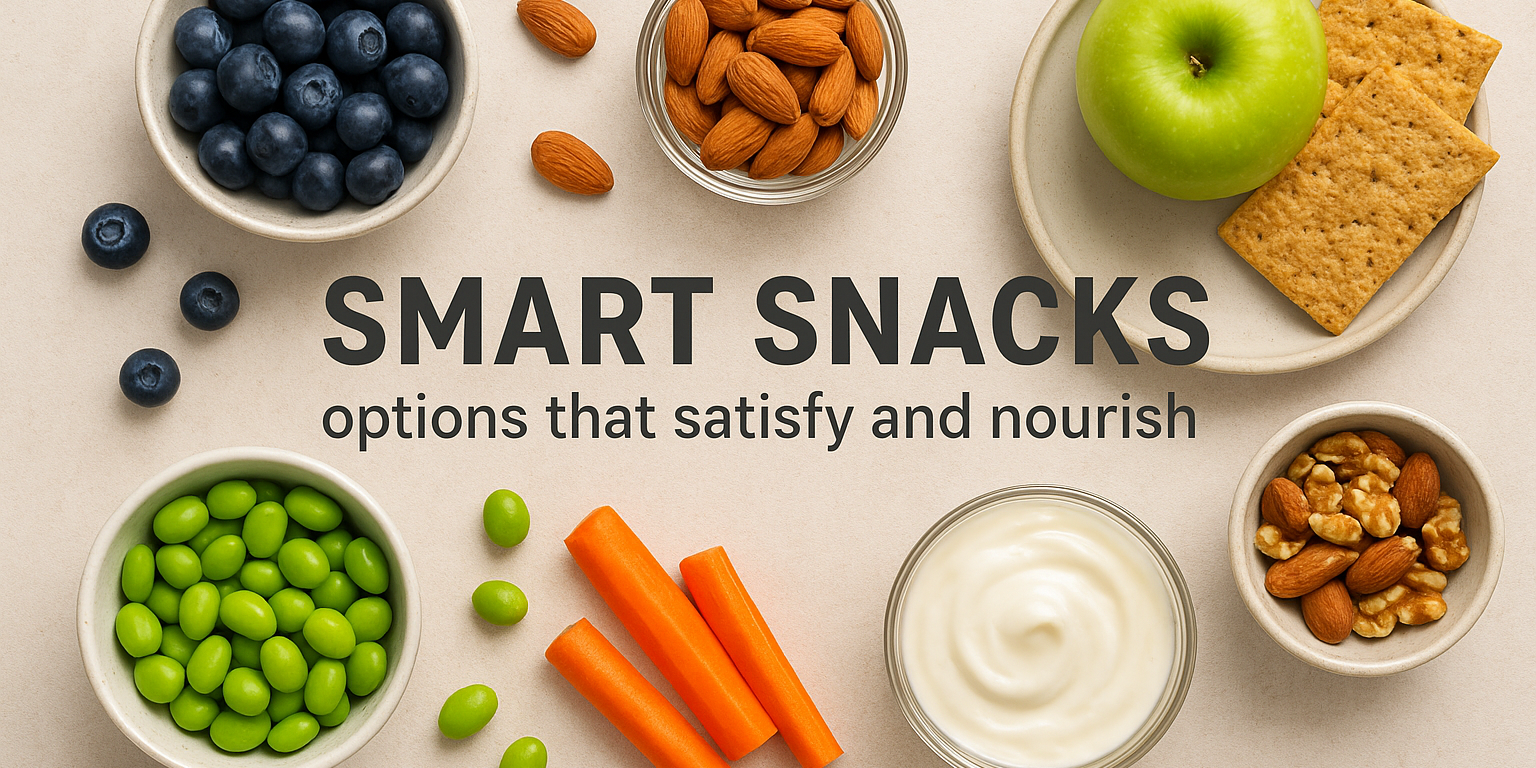
Smart snacks: options that satisfy and nourish
Snacking gets a bad rap, but it doesn’t have to derail your goals. The right snack can bridge meals, steady blood sugar, and provide real nourishment when you’re on the go or in need of a quick pick-me-up. Smart snacks focus on a balance of protein, fiber, and healthy fats, while keeping added sugars to a minimum. They’re satisfying, practical, and easy to incorporate into a busy day.
What makes a smart snack
– Protein for fullness: Protein helps curb hunger and supports muscle health. Aim for roughly 5–10 grams per snack, depending on your needs.
– Fiber for digestion and staying power: Fiber slows digestion and can help prevent mid-afternoon crashes. Look for at least 3–5 grams of fiber per snack.
– Healthy fats for satiety: Small portions of nuts, seeds, or avocado add satisfying fats without a sugar crash.
– Minimal added sugars: Choose snacks with little or no added sugar, and avoid blends that rely on syrup or high-fructose corn syrup.
– Reasonable portion size: Most smart snacks fall in the 150–250 calorie range, though requirements vary by activity level and hunger cues.
– Nutrient density: Prioritize snacks that offer vitamins and minerals in addition to macronutrients.
Build-your-snack blueprint
– Start with protein: Greek yogurt, cottage cheese, hard-boiled eggs, edamame, or a small portion of tuna or chicken.
– Add fiber: Fresh fruit, vegetables, whole-grain options, oats, or legumes.
– Include healthy fats: Nuts, seeds, nut butters, olive or avocado oil, or a small slice of avocado.
– Include a touch of complex carbs if needed: Whole-grain crackers, a small whole-grain tortilla, or a dried fruit with nuts (in moderation due to sugar content).
– Hydrate: Pair snacks with water, unsweetened tea, or sparkling water to support fullness and hydration.
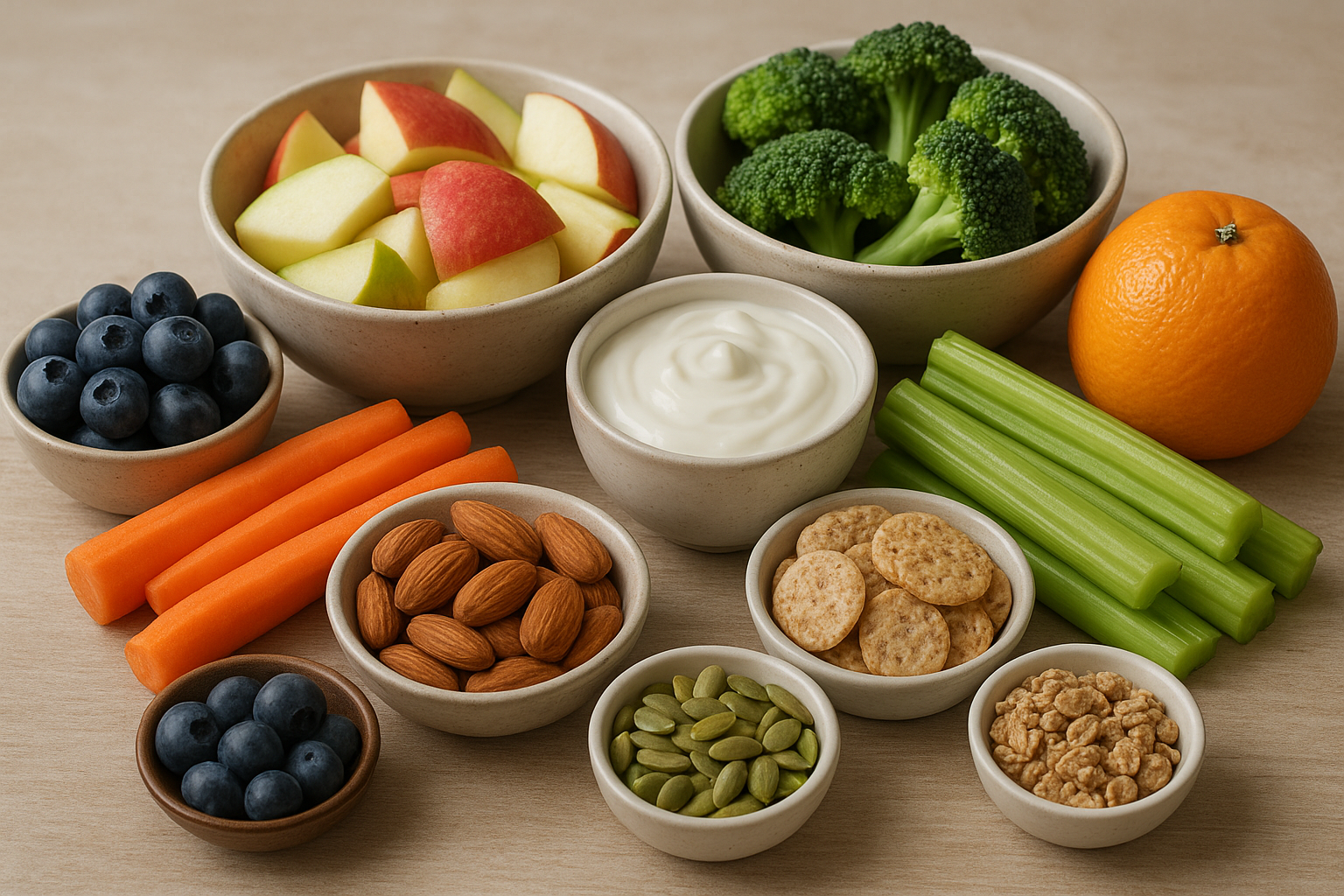
Quick ideas by category
– Protein-forward snacks
– Greek yogurt with berries and a drizzle of honey or a sprinkle of chia.
– Cottage cheese with sliced peaches or pineapple.
– A hard-boiled egg with cherry tomatoes and a pinch of salt.
– A small can of tuna or salmon on cucumber rounds or celery sticks.
– Fiber-rich plant-based snacks
– Apple or pear slices topped with almond butter.
– Carrot and cucumber sticks with hummus.
– Roasted chickpeas seasoned with paprika and sea salt.
– Air-popped popcorn with a light sprinkle of nutritional yeast.
– Healthy-fat and crunch
– A handful of mixed nuts and a few dark chocolate chips.
– Whole-grain crackers with avocado mash or hummus.
– Edamame pods sprinkled with sea salt.
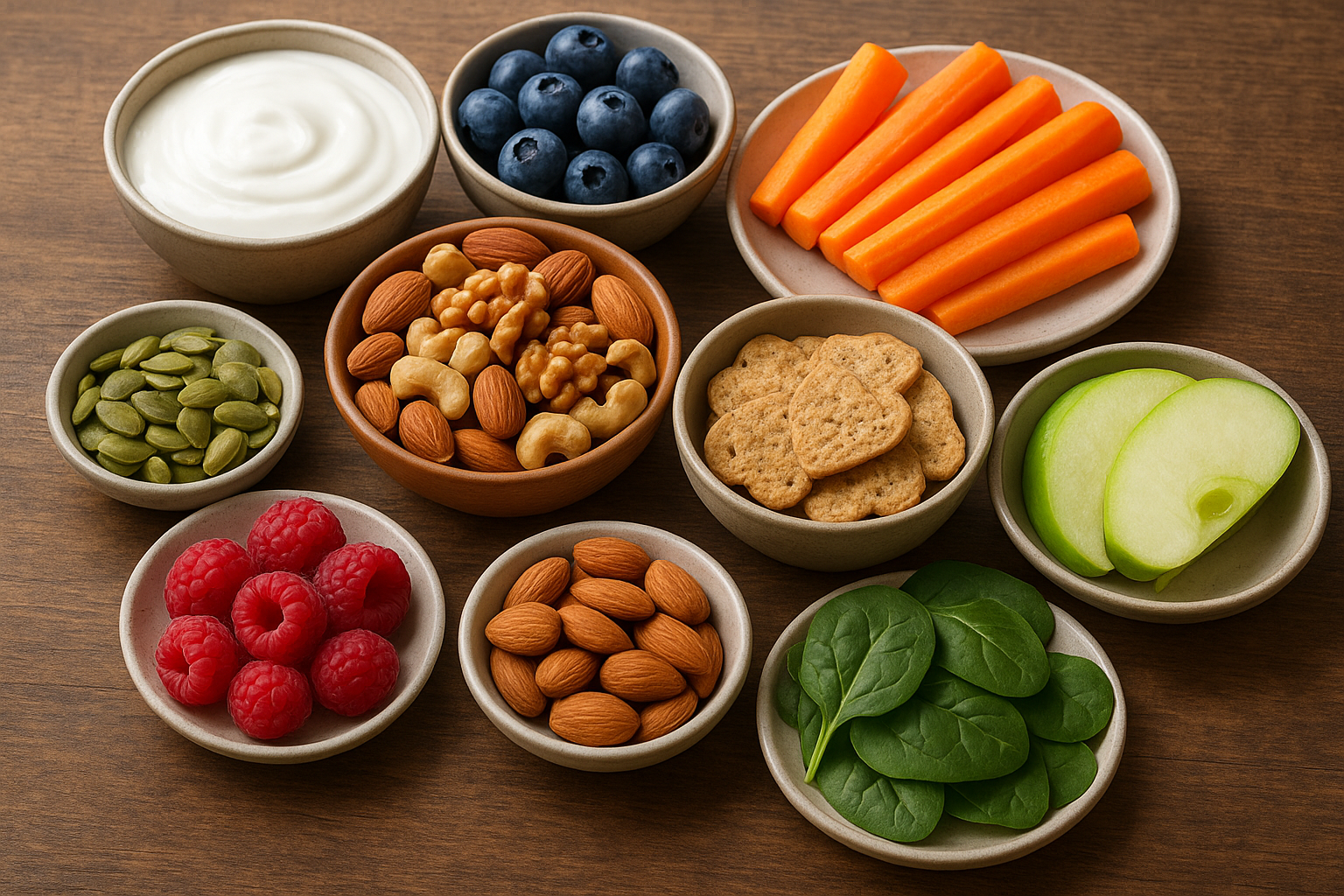
– Rice cakes topped with almond butter and banana slices.
– Dairy-free or vegan options
– Smoothie with plant-based protein, spinach, frozen berries, and a splash of almond milk.
– Chia pudding made with coconut or almond milk and topped with fruit.
– Sunflower seed butter on apple slices.
– Roasted edamame or seasoned chickpeas.
– On-the-go combos
– String cheese or a small cheese wedge with a piece of fruit.
– Yogurt tube or a small cup of fortified soy or almond yogurt with berries.
– Sliced bell peppers or cucumbers with a portable hummus cup.
– A whole-grain wrap or pita pocket filled with hummus and veggies.
Prep tips for success
– Batch and portion: Pre-portion snacks into small containers or bags (roughly 150–250 calories per pack) so you reach for them without thinking.
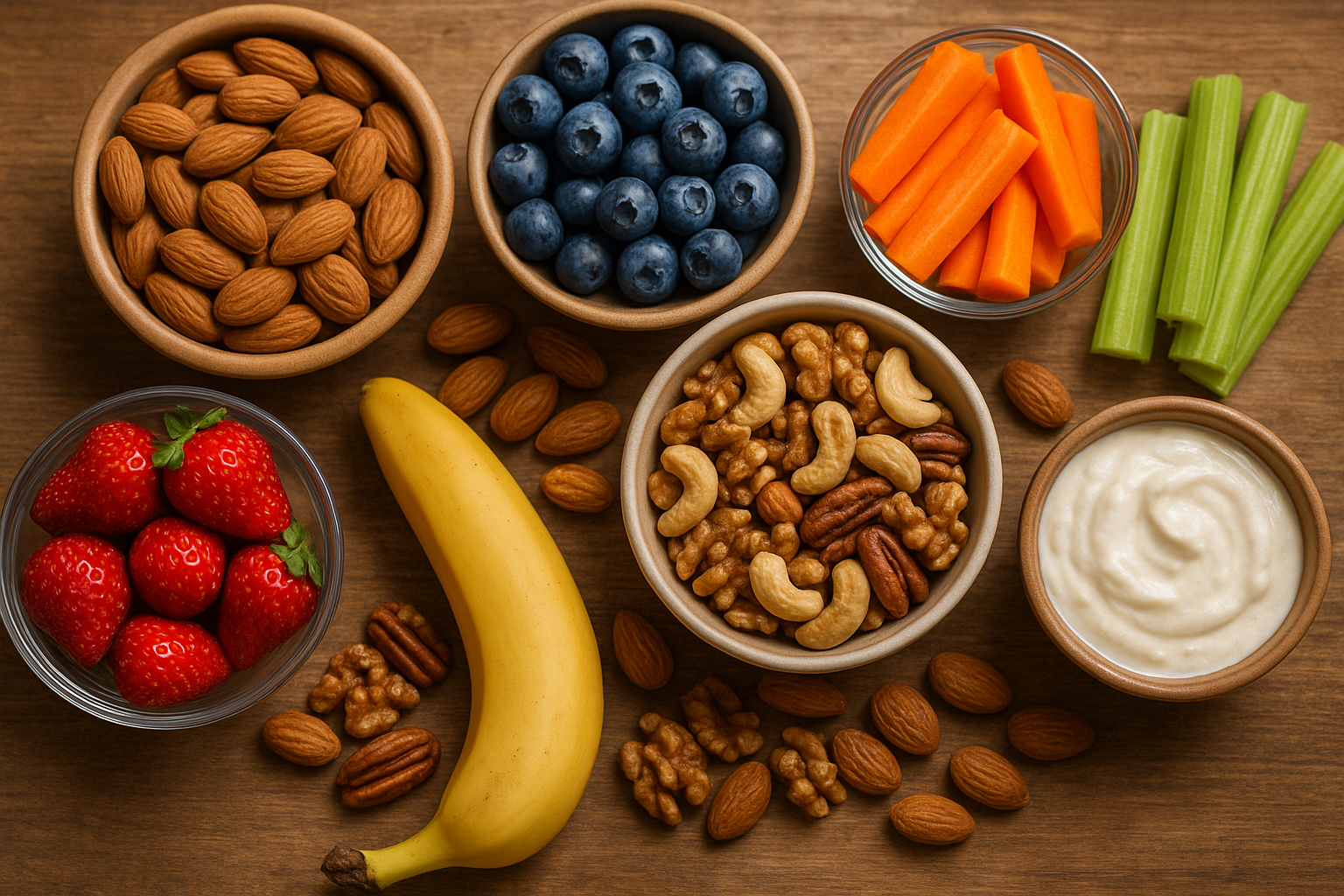
– Keep a simple pantry: Have a rotation of go-to items—yogurt, hard-boiled eggs, hummus, nuts, apples, carrots, whole-grain crackers, and canned fish or beans.
– Read labels: Watch for added sugars and unnecessary fats. Choose products with recognizable ingredients and minimal additives.
– Customize to your schedule: If you have a late lunch, add a protein-rich snack midday. If you work out in the afternoon, a protein–carb combo can aid recovery.
– Balance still wins: If you crave something sweet, pair a small portion of dark chocolate with nuts or fruit to satisfy the taste and provide fats and fiber.
Catering to different needs
– Gluten-free: Rice cakes, corn crackers, fruit with nut butter, or veggie sticks with guacamole.
– Dairy-free: Yogurt alternatives with berries, chia pudding, or hummus with veggies.
– Vegetarian/vegan: Edamame, roasted chickpeas, tofu bites, or a protein smoothie with plant-based protein powder.
– Weight management: Focus on higher-protein options with fibrous vegetables, and be mindful of portions of high-fat snacks like nuts.
Common pitfalls to avoid
– Overloading on dried fruit: It’s easy to underestimate how much sugar you’re consuming in dried fruit. Pair with a protein source rather than eating alone.
– Reaching for chips or cookies out of habit: When in doubt, choose a snack that includes protein or fiber to help you feel full longer.
– Skipping snacks altogether: If you routinely miss meals, a small nutrient-dense snack can prevent overeating later.
Bottom line
Smart snacks are about intention and balance. They bridge gaps between meals, support steady energy, and nourish your body with protein, fiber, and healthy fats. With a little planning and a few go-to options, you can keep cravings in check, fuel your day, and enjoy snacks that truly satisfy.
