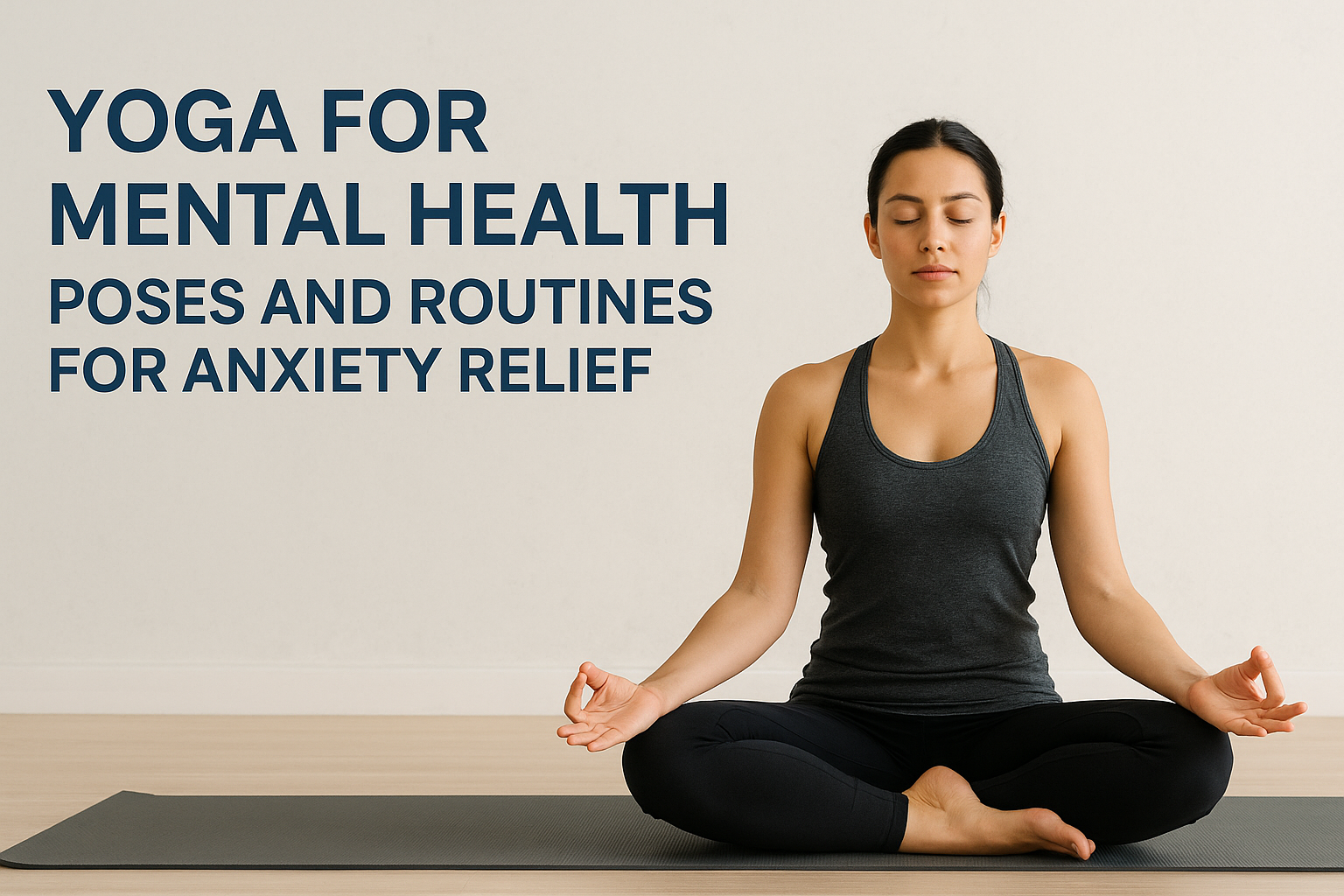
Yoga can be a helpful ally for mental health, especially when anxiety feels overwhelming. By combining gentle movement, breath awareness, and stretches that calm the nervous system, you can create routines that support groundness, better sleep, and a more relaxed body-mind state. The goal is not to push into advanced postures, but to cultivate safety, ease, and consistency.
How yoga helps anxiety
– Breath and nervous system: Slow, mindful breathing stimulates the parasympathetic nervous system, signaling the body to relax and reduce the “fight-or-flight” response.
– Body awareness: Moving with gentle attention helps you notice sensations without judgment, which can ease spiraling thoughts.
– Sleep and mood: Regular practice can improve sleep quality and daytime mood, both of which influence anxiety levels.
– Coping skills: Short, accessible routines provide practical tools you can turn to in moments of stress between sessions.
Key poses for anxiety relief (with practical tips)
– Child’s Pose (Balasana)
– How: Knees wide or together, hips toward heels, forehead to the mat. Stretch arms forward or rest alongside the body.
– Why: Grounding, gentle torso and back stretch, calm breath.
– Tip: Breathe in through the nose, out through the mouth to release tension on the exhale.
– Cat-Cow (Marjaryasana-Bitilasana)
– How: On hands and knees. Inhale to cow (arch the back, lift the chest). Exhale to cat (round the spine, chin to chest).
– Why: Lubricates the spine, builds awareness of breath with movement, soothing rhythm.
– Tip: Aim for 6–10 slow, full cycles.
– Puppy Pose (Uttana Shishosana)
– How: From all fours, walk the hands forward while keeping hips over knees. Forehead or chest can rest toward the mat.
– Why: Opens the shoulders and chest, promotes a gentle stretch that can ease tension held in the upper back and neck.
– Tip: If the head is far from the mat, use a block for support under the forehead.
– Seated Forward Bend (Paschimottanasana) with strap
– How: Sit with legs extended. Use a strap looped around the feet and hold it with both hands, or bend the knees slightly to reduce strain.
– Why: Calming stretch for the back and hamstrings; encourages slow, steady breathing.
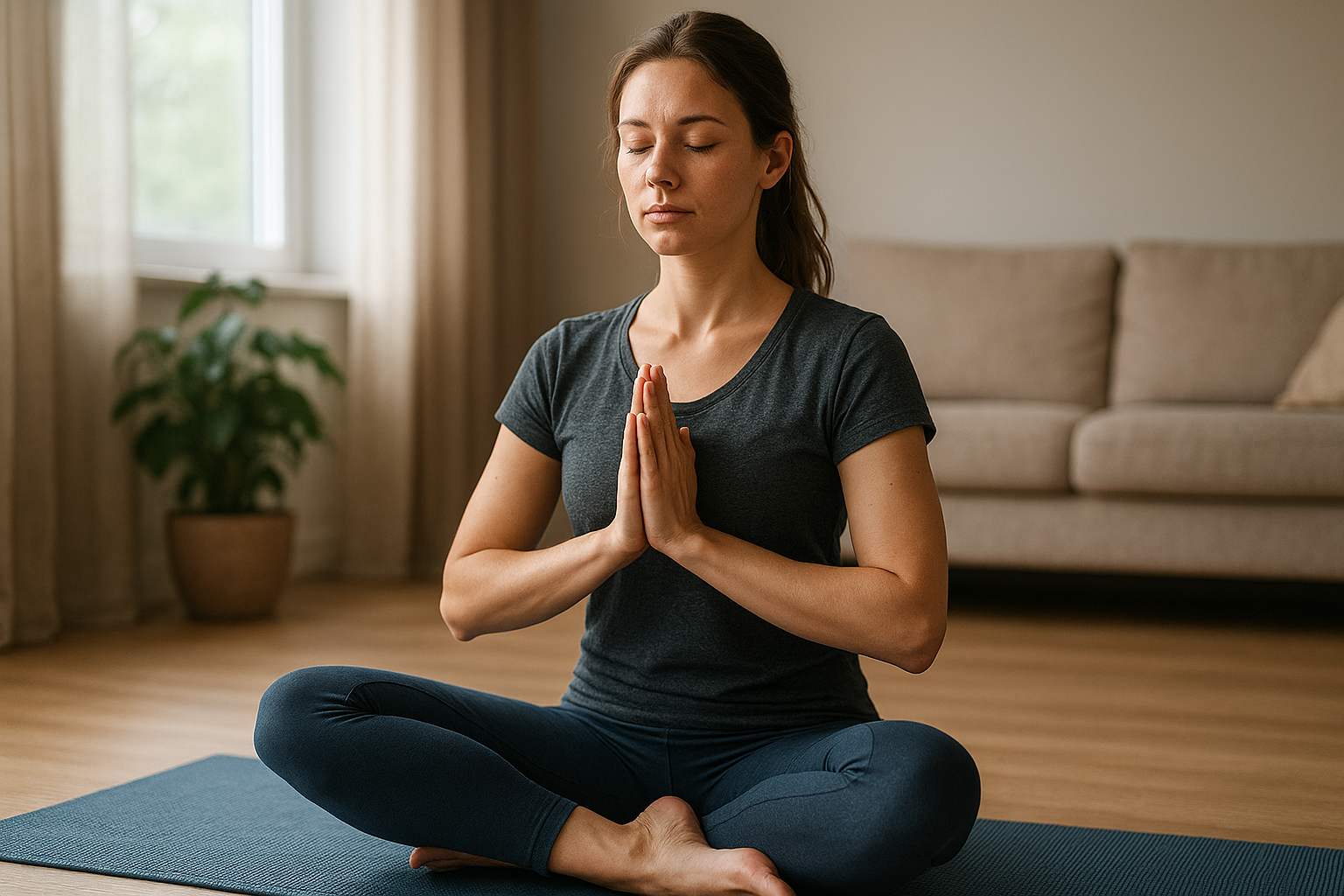
– Tip: Keep a soft bend in the knees; lengthen the spine on inhale, fold only as far as comfortable on exhale.
– Bound Angle Pose (Baddha Konasana) with forward fold (optional)
– How: Sit with the soles of the feet together, knees open wide. Use cushions or blocks under the knees. Gentle forward fold over the legs or a supported version.
– Why: Opens hips, a common stress point; can feel grounding and release tension.
– Tip: Use props and do not force the fold.
– Bridge Pose (Setu Bandha Sarvangasana) or Supported Bridge
– How: Lie on your back, knees bent, feet hip-width apart. Lift the hips, place a block or bolster under the sacrum if desired.
– Why: Opens the chest, calms the nervous system, stimulates parasympathetic response.
– Tip: Keep the neck comfortable; avoid sagging the shoulders.
– Legs-Up-The-Wall (Viparita Karani)
– How: Sit sideways against a wall, swing legs up the wall, and lie back. Place a folded blanket under the hips if needed.
– Why: Very calming; reduces leg and lower back tension, helps mind settle.
– Tip: Close the eyes and breathe evenly for 5–10 minutes.
– Supine Twist (Gentle variations of Sukhasana with a twist or Supta Matsyendrasana)
– How: Lying on the back, knees bent, drop knees to one side with a gentle twist, arms outstretched.
– Why: Releases tension in the spine and abdomen; can feel soothing and grounding.
– Tip: Move slowly and keep the shoulders relaxed.
– Savasana (Corpse Pose)
– How: Lie flat on the back with legs relaxed, arms by your sides, palms up. Close the eyes if comfortable.
– Why: The final integration pose; signals the body to rest and reset.
– Tip: If thoughts wander, guide attention to breath or a body scan.
Breathing practices to pair with poses
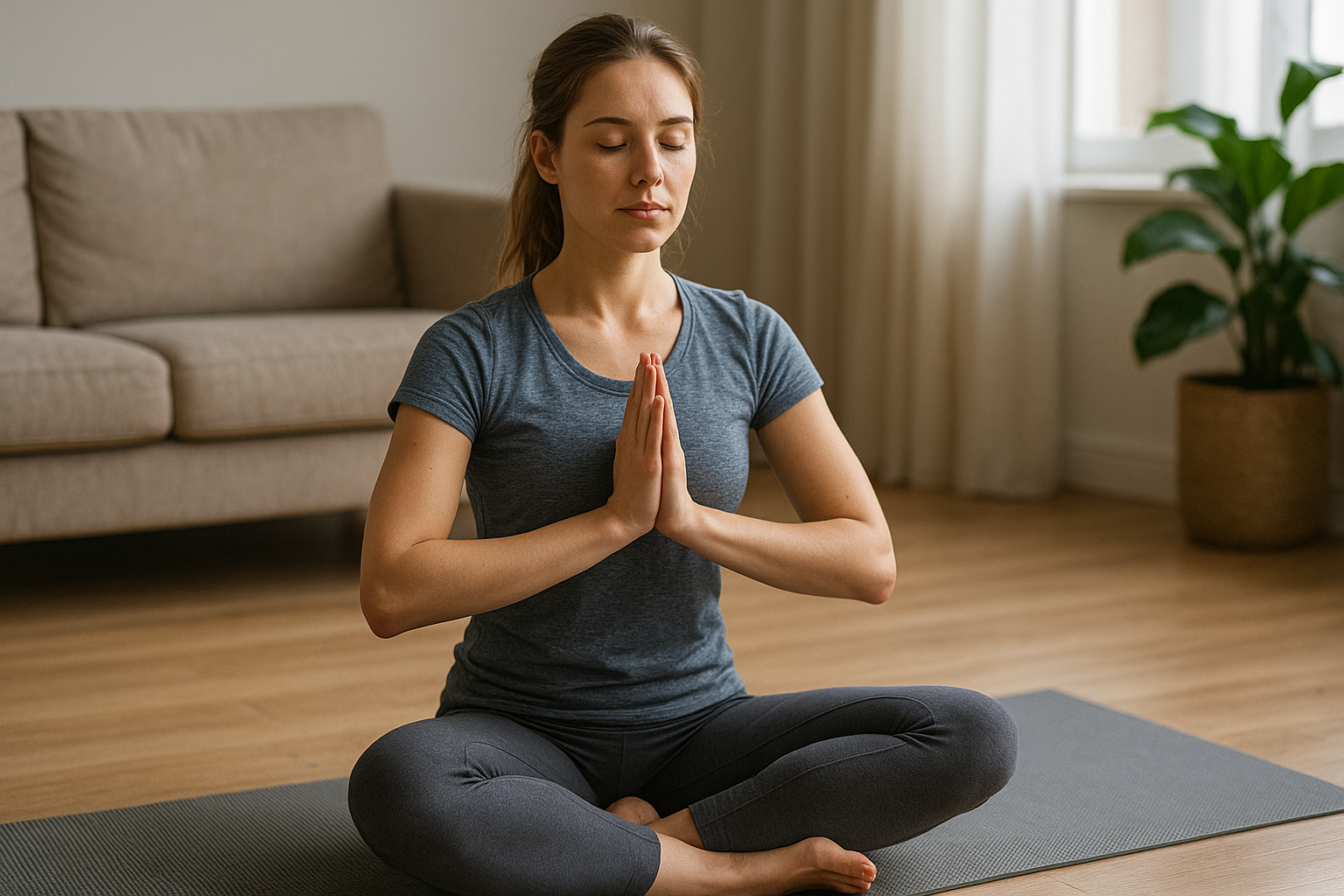
– Diaphragmatic breathing (belly breathing)
– How: Place one hand on the belly. Inhale through the nose to let the belly rise, then exhale slowly.
– Benefit: Deepens relaxation; easy to do anywhere.
– Box breathing (4-4-4-4)
– How: Inhale 4 counts, hold 4, exhale 4, hold 4. Repeat for several rounds.
– Benefit: Creates a sense of order and calm, helpful during moments of heightened anxiety.
– Alternate nostril breathing (Nadi Shodhana) – optional
– How: With the right thumb close the right nostril, inhale left; close left nostril with ring finger, exhale right; inhale right, close right, exhale left.
– Benefit: Balances the nervous system; may take a few attempts to feel comfortable.
Two sample routines for anxiety relief
Short routine: about 10 minutes
– Step 1: 2 minutes of diaphragmatic breathing, seated or lying down.
– Step 2: Gentle Cat-Cow flow for 1–2 minutes.
– Step 3: Child’s Pose for 2 minutes, with a soft focus on the breath.
– Step 4: Seated Forward Bend with a strap for 2–3 minutes, using long, slow exhales.
– Step 5: Legs-Up-The-Wall for 2–3 minutes in a quiet space.
– Step 6: Savasana for 2–5 minutes with a brief body scan.
Thorough routine: about 20–30 minutes
– Phase 1: Grounding (5 minutes)
– 2 minutes diaphragmatic breathing.
– 1–2 minutes Cat-Cow to warm the spine.
– 1 minute Puppy Pose to open the chest and shoulders.
– Phase 2: Gentle opening (10–12 minutes)
– 2 minutes Bound Angle Pose with a gentle forward fold or comfortable variation.
– 2 minutes Seated Forward Bend with strap.
– 2 minutes Bridge Pose or Supported Bridge.
– 2 minutes Supine Twist on each side.
– 2 minutes Legs-Up-The-Wall.
– Phase 3: Integration and rest (5–8 minutes)
– 5 minutes Savasana with a guided breath body scan or a short meditation.
– Optional add-ons: a minute of Nadi Shodhana at the start or between sections if you’re comfortable with the technique.
Accessibility and safety tips
– Use props: blankets, cushions, blocks, or a strap to support the body and avoid strain.
– Modify as needed: sit in a chair for those with limited mobility, perform poses with smaller ranges of motion, and avoid any pose that causes dizziness, sharp pain, or nausea.
– Move slowly: ease into every pose; never push into discomfort or pain.
– Consistency over intensity: even short, regular practice yields benefits over time.
– Consult professionals as needed: yoga can complement mental-health care, but it isn’t a substitute for medical or therapeutic treatment when needed.
Getting started
– Set a gentle intention for your practice: “I am here to soften, breathe, and notice.”
– Create a calm space: dim lighting, minimal distractions, a comfortable mat or chair, and a few minutes of warm-up breathing before you begin.
– Listen to your body: if a pose doesn’t feel right, skip it or adjust. Your breath is the most important anchor—keep it slow and steady.
Bottom line
Yoga offers practical tools for managing anxiety: mindful breathing, gentle movement, and postures that promote a sense of safety and ease in the body. By building a short, consistent routine that includes breathing practices and restorative poses, you can improve mood, sleep, and overall resilience. If anxiety is persistent or severe, consider seeking guidance from a mental-health professional in addition to your yoga practice.